Side Projects
Two things I built and shipped.
Writing the code is how I find out whether a design actually holds. These are the two I own end to end — the product decisions, the build, and the consequences of both.
01 — Product
soulyap
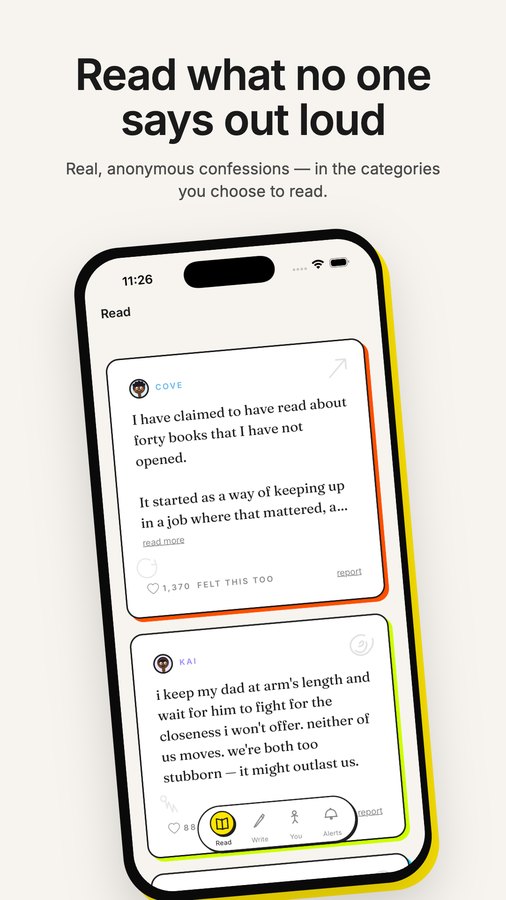
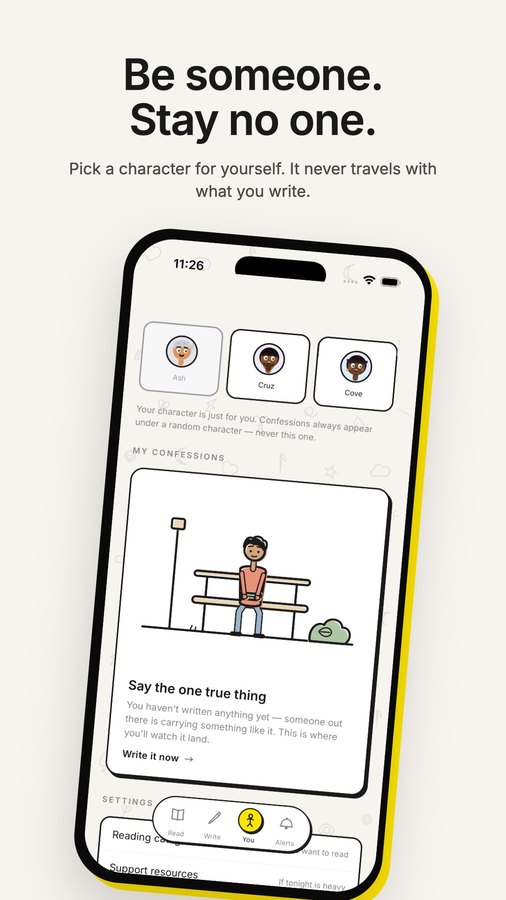
An anonymous confessions app. You write one true thing, then read what other people wrote about the same thing — and see how many felt it too.
There is no reply channel. No comments, no DMs, no profiles, no following. That reads as a missing feature until you notice it is the only one that matters: you cannot be targeted for what you said if there is no mechanism to reach you.
It costs the things that normally make a social product sticky — no community, no thanks, no conversation. What replaces them is the counter: how many other people felt the same. That turned out to be enough.
- Role
- Design and build, end to end — product, illustration system, motion spec, app
- Built with
- React Native · Expo · Reanimated · react-native-svg · TypeScript
- Surfaces
- Write · Read · You · Alerts · Safety & crisis · Account
- Status
- Live on Google Play · iPhone in progress
02 — Site
ajaykothapalli.xyz
The page you are reading. Designed and written as one thing, so the design system and the code are the same decision rather than a handoff.
- Role
- Design and build, end to end
- Built with
- Next.js 14 App Router · TypeScript · Vercel
- Contains
- 4 case studies and 2 articles from typed data, one renderer, no CMS
- Drawn
- Every sprite and scene is pixel art written as data in code — no stock art, nothing generated